To provide you with high-quality and efficient heat exchange exclusive solutions |20 years focus on finned tube radiator, heat exchanger design and production strength enterprises



-
Heat ExchangerHeat Exchanger
Heat exchangers are a very good energy-saving device that can reuse energy that would otherwise be wasted. -
Heat SinkHeat Sink
The industrial radiator adopts steel double-circuit (two rows) or multi-circuit (four rows, six rows) structure. The fin tube adopts winding molding process. The base tube is Ф18*2mm, the sheet height is 10mm, and the sheet thickness is 0.3mm. The distance between the sheets is 3mm, with high pressure bearing and corrosion resistance; -
 Products
The company's main products include fin tubes, fin tube radiators, fin tube heat exchangers, heaters, air preheaters, air coolers, etc. Product materials include steel, stainless steel, steel-aluminum composite, etc., and are widely used in chemical, petroleum, power, electric power, food, textile, printing and dyeing and other industries. -
About
Hebei Rongyang Thermal Energy Equipment Co., Ltd. is a R&D and manufacturer of fin tubes and fin tube equipment. A practitioner who provides technical support in the field of heat transfer and wins reputation with heat exchange efficiency. The company is located in Jizhou, an ancient civilization in Kyushu, in a provincial high-tech development zone. It covers an area of 16,000 square meters and has more than 300 employees. -
News
The company strives for survival by quality, seeks benefits from management, takes scientific and technological innovation as the driving force for development, regards integrity as the foundation of the enterprise, and establishes a customer-centered business philosophy. Our products cover nearly 30 provinces, cities, and autonomous regions in China, and we have established long-term cooperative relationships with many of the top 500 companies in the country.
Saudi Arabia Carbon steel wound finned tube
Category:
Saudi ArabiaWinding finned tube
- Product Description
-
1. Overview
Carbon steel finned tube is fin material and base tube material are carbon steel finned tube, using winding process processing.
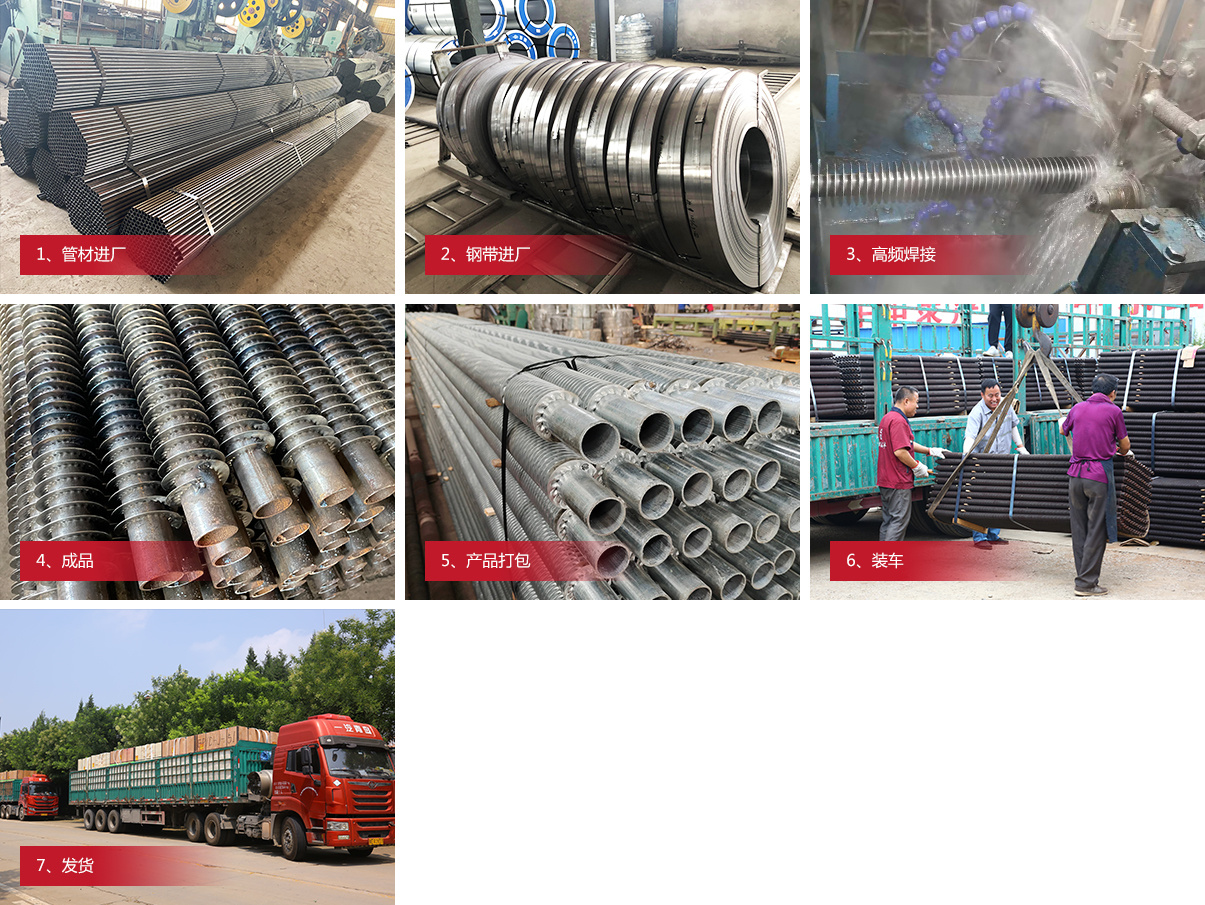
2. production process
When the carbon steel finned tube is wound, its fins are inverted Y-shaped. It is to fix the base pipe on a 360-degree rotating transmission winding device, and then select different types of clamps according to different sheet heights and sheet distances. The fins are strip-shaped, and when passing through the fixture, the fins are initially formed and wound on the base tube by mechanical tension.
Carbon steel finned tube spacing is larger, from 3.2-8mm, the thickness is generally 0.2-3mm, the unit heat exchange area is small, the contact thermal resistance is relatively large.
3. features
1. Efficient heat dissipation: the fins of the wound steel finned tube are closely attached to the base tube, which can make use of the heat conduction performance of the base tube to a large extent and improve the heat dissipation efficiency.
2. Strong corrosion resistance: The steel finned tube has undergone anti-rust treatment, which can adapt to various harsh environments and has a long service life.
3. Easy installation: The winding steel finned tube can be installed horizontally or vertically, which is convenient and quick.
4. Convenient maintenance: The fin is closely attached to the base tube, not easy to fall off, and easy to maintain.
4. Application Areas
Winding steel finned tube is widely used in industry, agriculture, construction and other fields. In industry, it can be used for heat dissipation and heat preservation of various industrial equipment; in agriculture, it can be used for heating and heat preservation in greenhouses, farms and other places; in construction, it can be used in air conditioning, heating and other systems.
Production process

Contact Information
Do you have any questions about our products or after-sales service?
Simply contact us:
Mobile:+8615503298989
Telephone:0086-318-887-7776
E-mail:hsrongyangnuantong@163.com
Service
Website