To provide you with high-quality and efficient heat exchange exclusive solutions |20 years focus on finned tube radiator, heat exchanger design and production strength enterprises



-
Heat ExchangerHeat Exchanger
Heat exchangers are a very good energy-saving device that can reuse energy that would otherwise be wasted. -
Heat SinkHeat Sink
The industrial radiator adopts steel double-circuit (two rows) or multi-circuit (four rows, six rows) structure. The fin tube adopts winding molding process. The base tube is Ф18*2mm, the sheet height is 10mm, and the sheet thickness is 0.3mm. The distance between the sheets is 3mm, with high pressure bearing and corrosion resistance; -
 Products
The company's main products include fin tubes, fin tube radiators, fin tube heat exchangers, heaters, air preheaters, air coolers, etc. Product materials include steel, stainless steel, steel-aluminum composite, etc., and are widely used in chemical, petroleum, power, electric power, food, textile, printing and dyeing and other industries. -
About
Hebei Rongyang Thermal Energy Equipment Co., Ltd. is a R&D and manufacturer of fin tubes and fin tube equipment. A practitioner who provides technical support in the field of heat transfer and wins reputation with heat exchange efficiency. The company is located in Jizhou, an ancient civilization in Kyushu, in a provincial high-tech development zone. It covers an area of 16,000 square meters and has more than 300 employees. -
News
The company strives for survival by quality, seeks benefits from management, takes scientific and technological innovation as the driving force for development, regards integrity as the foundation of the enterprise, and establishes a customer-centered business philosophy. Our products cover nearly 30 provinces, cities, and autonomous regions in China, and we have established long-term cooperative relationships with many of the top 500 companies in the country.
Tunisia Non-standard finned tube radiator
Category:
TunisiaNon-standard custom finned tube radiator
- Product Description
-
Overview of 1. finned tube radiator
The finned radiator is the most widely used heat exchanger in gas and liquid heat exchange equipment. It achieves the purpose of heat transfer enhancement by processing fins on ordinary base tubes. The base pipe can be made of steel pipe; stainless steel pipe; copper pipe, etc. Fins can also be used with steel strips; stainless steel strips; copper strips; aluminum strips, etc., which can be customized according to needs.
2. finned tube radiator structure
Fin type radiator can be divided into winding type in fin structure form. Tandem type; Solder plate type; Rolling sheet type, according to the structure form can be divided into SRZ;SRL;GLII;FUL,TL type, etc.
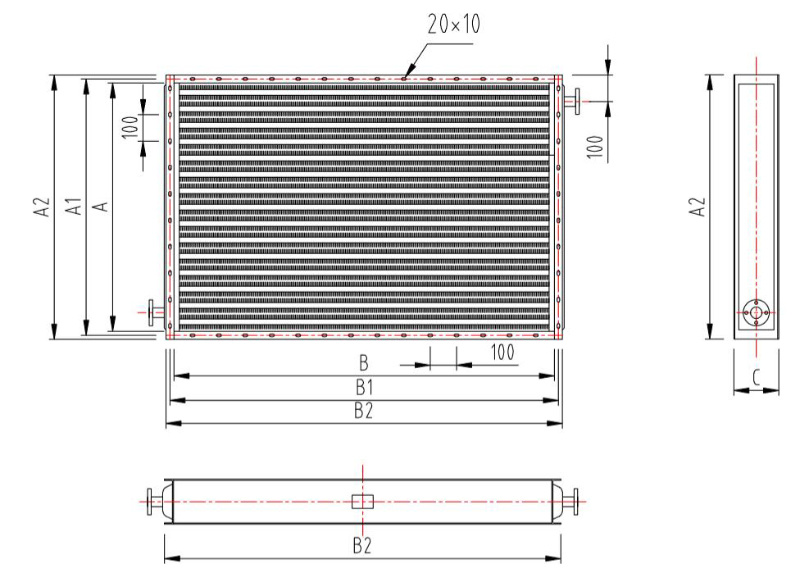
SRZ type finned tube radiator & SRL type radiator & SLZ drying room radiator structure diagram:
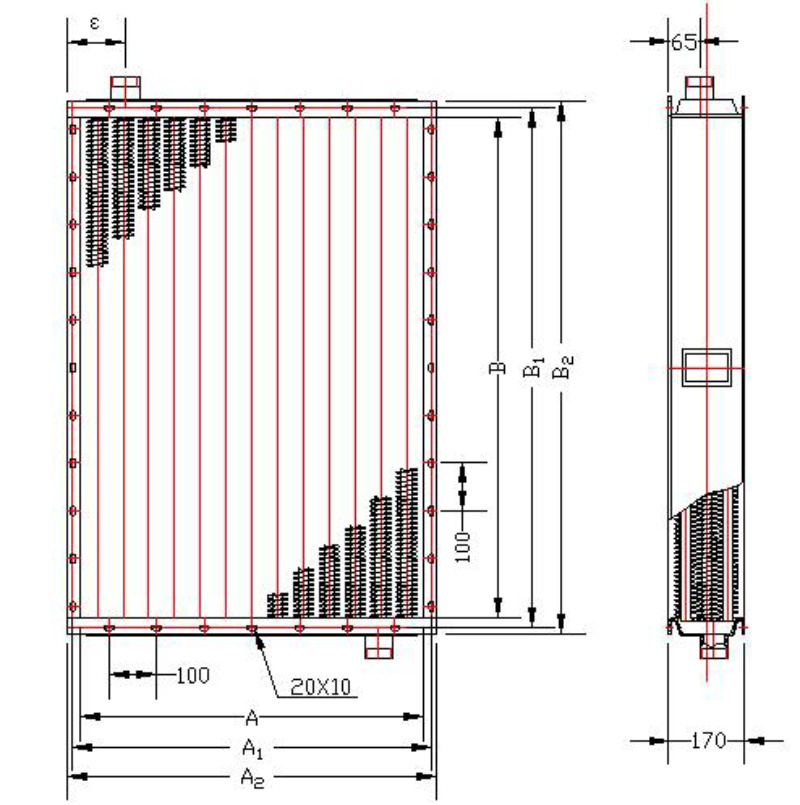
SRQ steam radiator structure diagram:
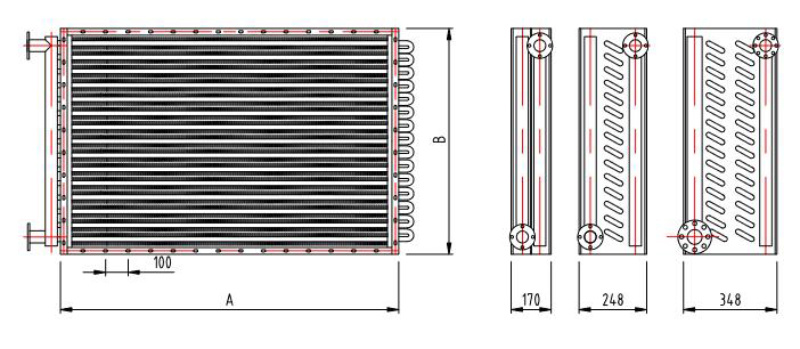
GL type industrial radiator structure diagram:
At present, the most widely used finned radiator is steel-aluminum finned tube (wound sheet steel-aluminum composite finned tube, rolled sheet steel-aluminum composite finned tube), which takes advantage of the pressure resistance of steel pipe and the high thermal conductivity of aluminum. It is compounded on a special machine tool. The thermal contact resistance is almost zero at 210°C. The steel-aluminum composite tube radiator has irreplaceable advantages over other types of finned tube radiators. Finned tube radiators are generally used for heating or cooling air, and have the characteristics of compact structure and large unit heat exchange area.
3. finned tube radiator application field
The finned tube radiator is mainly used for hot air heating, air conditioning, cooling, dehumidification, drying and other projects. It is suitable for heating air with steam or high temperature hot water, and cooling air with salt water or low temperature water. It has been used in dozens of industries. It covers industries such as industrial and mining enterprises, light industry, papermaking, beer malt, starch, chemical industry, national defense, construction, textile printing and dyeing, metallurgy, electric power, electronics, dairy products, food processing, ceramics, hospitals, theaters, etc.
Production process

: next page

Contact Information
Do you have any questions about our products or after-sales service?
Simply contact us:
Mobile:+8615503298989
Telephone:0086-318-887-7776
E-mail:hsrongyangnuantong@163.com
Service
Website